How much does a 50–65ft motor yacht really cost to run?
I don't publish how-to guides — the internet has plenty, mostly written by people who never owned one of these boats. This page is different: it's my receipts. Brokers won't publish these numbers and management companies have no reason to. I can, because I've lived them.
The short answer: for a well-kept motor yacht around 55–58 feet based in the South of France, run by an owner-operator without full-time crew, budget roughly €50,000–60,000 a year plus fuel. The line items below sum to about €46,500 in a good year — the gap is the irregular years, and there is always an irregular year.
From 2014 to 2025 I owned motor yachts from 48 to 65 feet, kept at Port Vauban (Antibes), Marina Baie des Anges, Les Marines de Cogolin, Port de Fontvieille in Monaco and — for a spell across the border — Porto Mirabello in La Spezia. I captained and maintained them myself, with my wife and the occasional deckhand. The figures below are anchored on the boat I ran longest — a Princess 56 worth around €1 million, twin Volvo Penta D13s — and this is where the money actually went.
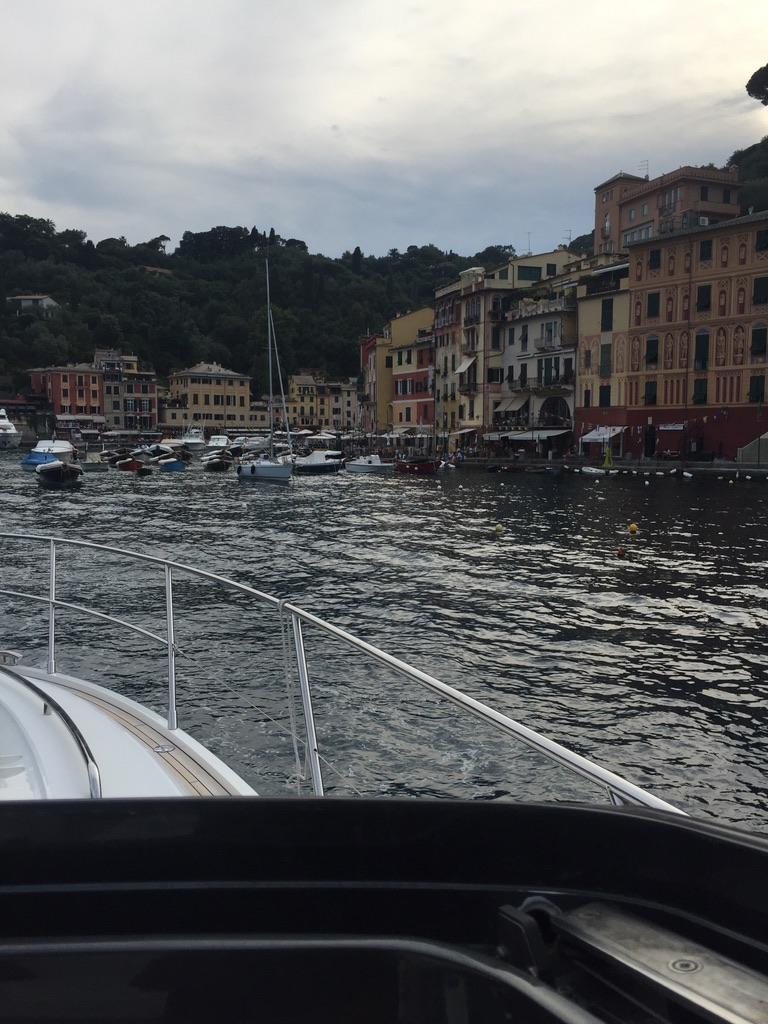
The annual budget at a glance
| Line item | My real annual cost (56ft, €1m boat) | Notes |
|---|---|---|
| Berth — Port Vauban, Antibes | €17,000 | For under 18m. Cross the 18m line and it jumps to €30,000 — see below. |
| Water & electricity | ~€1,500 | Modest in France; can be far more in Italy, especially Sardinia. |
| Insurance | ~€4,000 | £3,500 on a UK-flagged, personal-use boat — roughly 0.4% of hull value. |
| Engine & generator servicing | ~€5,000 | Twin Volvo D13s plus genset, a normal year. |
| Haul-out, antifoul, props, anodes | €5,000–6,000 | Once a year: lift, wash, antifoul, propeller cleaning, anodes. |
| Systems: stabiliser, air-con, tender | ~€3,500 | Gyro or fins ~€1,000; air-con ~€500; tender service & winter storage ~€2,000. |
| General repairs — the honest line | ~€5,000 | An average year, labour included. Worst normal year: €7–8,000. |
| Deckhand, ad hoc | €3,000–4,000 | €150/day when needed. A monthly arrangement runs ~€3,000/month. |
| Admin, safety kit, registration | ~€1,000–2,000 | Flag, liferaft servicing, flares, extinguishers, charts. |
| A good year, before fuel | ~€46,500 | Every line behaving itself. |
| What to actually budget, before fuel | €50,000–60,000 | Because some year the excess, the tender, or the "while we're in there" arrives. |
| Fuel, typical local season | €5,000–6,000 | Day trips most weekends, returning to the berth. Detail below. |
MY OWN COSTS, CÔTE D'AZUR, OWNER-OPERATED. UPDATED JULY 2026. YOURS WILL DIFFER BY BOAT, PORT AND LUCK — BUT NOT BY AS MUCH AS BROKERS IMPLY.
Berthing: the cost that's really a postcode lottery

At Port Vauban in Antibes, an annual berth runs about €17,000 for a boat up to 18 metres — and €30,000 from 18 to 21 metres. Read that again: a few centimetres can cost you thirteen thousand euros a year, every year. My Princess 56's spec sheet said 18.11m; measured properly, she came in under 18. If your boat is anywhere near the line, have her measured by the harbour master before you accept the bigger band — it was one of the best-value hours of my ownership.
Across the border, Porto Mirabello in La Spezia was significantly cheaper on an annual contract, and Italian marinas are generally far more willing to negotiate seasonal deals — though their daily rates in high season are steeper than France's, so the arithmetic only works if you commit. Monaco is the opposite trap: Fontvieille matches Antibes in high season, but winter rates stay high, so the annual bill lands roughly 25% above the South of France for the same boat.
Water and electricity in France are the rare pleasant surprise — under €1,500 a year for me. In Italy, and especially Sardinia, they can be multiples of that. One more Med reality nobody mentions: in drought summers, French and Monegasque marinas ration water, so the Sunday boat wash is not a given.
Insurance: what moves the premium
I paid about £3,500 a year on a boat worth around €1 million — roughly 0.4% of hull value, UK-flagged, personal use, western Med cruising range. That's the good-record price; claims move it, as I found out the expensive way (see the repairs section). The number that matters more than the premium is the excess: mine was £3,000, and one incident in Sardinia made it the best £3,000 I ever spent.
Maintenance: the honest section
The scheduled part is predictable: servicing the twin Volvo D13s and the generator cost me about €5,000 in a normal year, and the annual haul-out — lift, pressure wash, antifoul, propeller cleaning, anodes — another €5,000–6,000. Do the haul-out every year unless you enjoy buying fuel; a fouled hull shows up directly in litres per mile.
The unscheduled part averaged another €5,000 a year including labour, and in a decade I never had a normal year above €7–8,000. The exception wasn't wear at all: I found a rock in Sardinia. The repair bill was around £30,000 — roughly €34,000 — of which I paid my £3,000 excess and the insurer paid the rest. That is precisely what the policy is for, and precisely why you should care more about the excess and the claims process than about shaving €300 off the premium.
Here is the lesson that saves owners the most money, learned across ten years of quotes: the biggest risk isn't the fault — it's the contractor quoting for a bigger job than the fault requires. A weeping seal becomes "we should really pull the drive." A tired pump becomes a new system. Before you approve anything, be certain what the actual problem is and what the proportionate fix looks like. Most of what I now do for clients on quote reviews is exactly this: separating the repair from the opportunity.
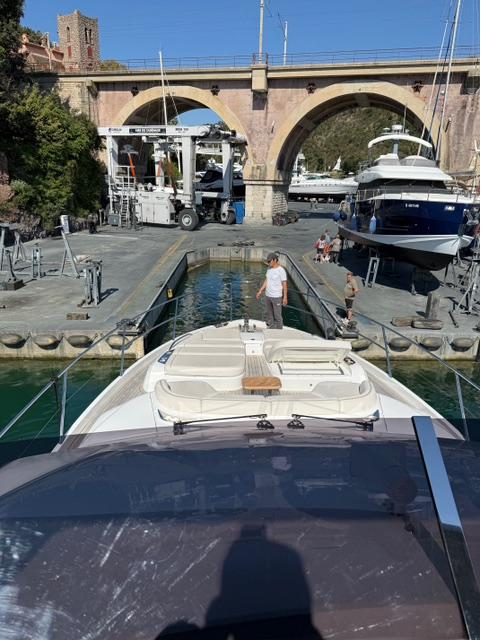
The systems everyone forgets to budget
Beyond engines and hull, a modern motor yacht carries a small fleet of systems that each want annual money. My gyro stabiliser on the 56 cost about €1,000 a year to service; the fins on the 65, much the same. Air conditioning is cheap to keep happy — around €500 a year, mostly filter cleaning — and very expensive to neglect in a Med summer. The tender was the quiet drain: about €2,000 a year in servicing and winter storage, plus the constant small repairs a hard-working tender generates. Honestly? It's the one piece of kit I'd do without on my next boat. I never fitted a watermaker, but owners who have tell me to budget around €1,500 a year — they're notoriously maintenance-hungry.
Then there's the category with no annual service bill and the highest blood pressure: hydraulic passerelles and platforms. Nothing to schedule, but when they fail — and they fail far too often — repairs are expensive and the real cost is time: a boat with a dead passerelle is tied to her berth until the technician actually shows up. Getting the right person aboard quickly is worth more than any spare part.
Fuel: what she actually burns
My 56-footer burned about 12 litres per nautical mile on the plane — call it 300 litres an hour across both engines at 25 knots. Two things move that number more than owners expect: how clean the hull is (another reason for the annual lift) and how much weight you're carrying. Boats with IPS pod drives do meaningfully better on consumption.
In practice, if you use the boat the way most Riviera owners do — day trips most weekends, back to the berth at night — a season's fuel came to about €5,000–6,000. Start doing multi-week cruises to Corsica and Sardinia and fuel becomes whatever you want it to become.
The winter question: haul out or stay in?
Here's a heresy from ten years of doing it: I never winterised. I kept the boat in the water, on her berth, available — and used her off-season, which on this coast is half the point of the Med. Winterisation is usually sold as a package with dry winter storage, and once you price the lift, the storage, the decommissioning and the spring recommissioning, it is not meaningfully cheaper than simply keeping your berth — with the added downside that systems left dormant for months are less happy than systems run regularly.
The honest version: if your boat lives somewhere you can't reach in winter, or you genuinely won't touch her from October to April, dry storage has a case. If you're on the Côte d'Azur and can get down even a few weekends a winter, keep her wet, keep her running, and keep January boat lunches in your calendar.
The costs nobody puts in the spreadsheet
Two lessons that cost real money before they became advice. First: paint is the most expensive routine work you can commission — a proper respray of major surfaces is eye-watering, disruptive and hard to do well in-season. If you can choose between a boat that needs paint and one that doesn't, that difference is worth far more than it looks on the listing. If yours needs it, plan it like a refit, not a maintenance item.
Second: fit the right options at the yard, or price the retrofit honestly before you buy. Retrofitting equipment onto a finished boat means expensive labour and — the part nobody warns you about — workers aboard cause collateral damage constantly: scuffed joinery, cracked panels, mystery marks. When I review a spec with a buyer now, half the value is exactly this: what must be ordered from the factory, what can wait, and what a missing option really costs to add later so you can put that number into the negotiation.
Crew: the owner-operator's occasional deckhand
I ran the boat myself — that's the entire premise of this page — with my wife and an occasional deckhand. A good day-rate deckhand on this coast is about €150 a day; across a season of irregular use I'd budget €3,000–4,000. The catch with day rates is availability: in August, when you most want one, so does everyone else. A monthly arrangement at around €3,000 a month guarantees the person but changes the economics entirely — and once you're paying monthly crew, you've left owner-operator territory, and the 10%+ cost world begins.
So: what should you budget?
The rule of thumb you'll hear is 10% of the boat's value per year. My experience: run the boat yourself, and you can do it on 5–6% — that's the €50,000–60,000 above on a €1 million boat. Hand the running to crew and management and 10%+ is realistic, which on the same boat is another €40,000–50,000 a year for convenience. Neither answer is wrong; they're different products. But you should choose one deliberately, not drift into the expensive one through inattention — and either way, keep a contingency untouched, because the expensive year is not an if.
None of this is a reason not to own. It's the reason to own with your eyes open — and to never accept a quote you can't judge.
Want this picture for your boat — or the one you're about to buy? These are my numbers; yours will be specific to your boat, port and plans. In a 60–90 minute call I'll build the real picture for your situation, with a 7-day money-back guarantee if it wasn't worth it.
Book a session → Buying right now? →ABOUT THE AUTHOR — Pasquale Cataldi owned and skippered motor yachts from 48 to 65 feet in the western Mediterranean from 2014 to 2025, and now advises owners and buyers independently. No listings, no commission.